
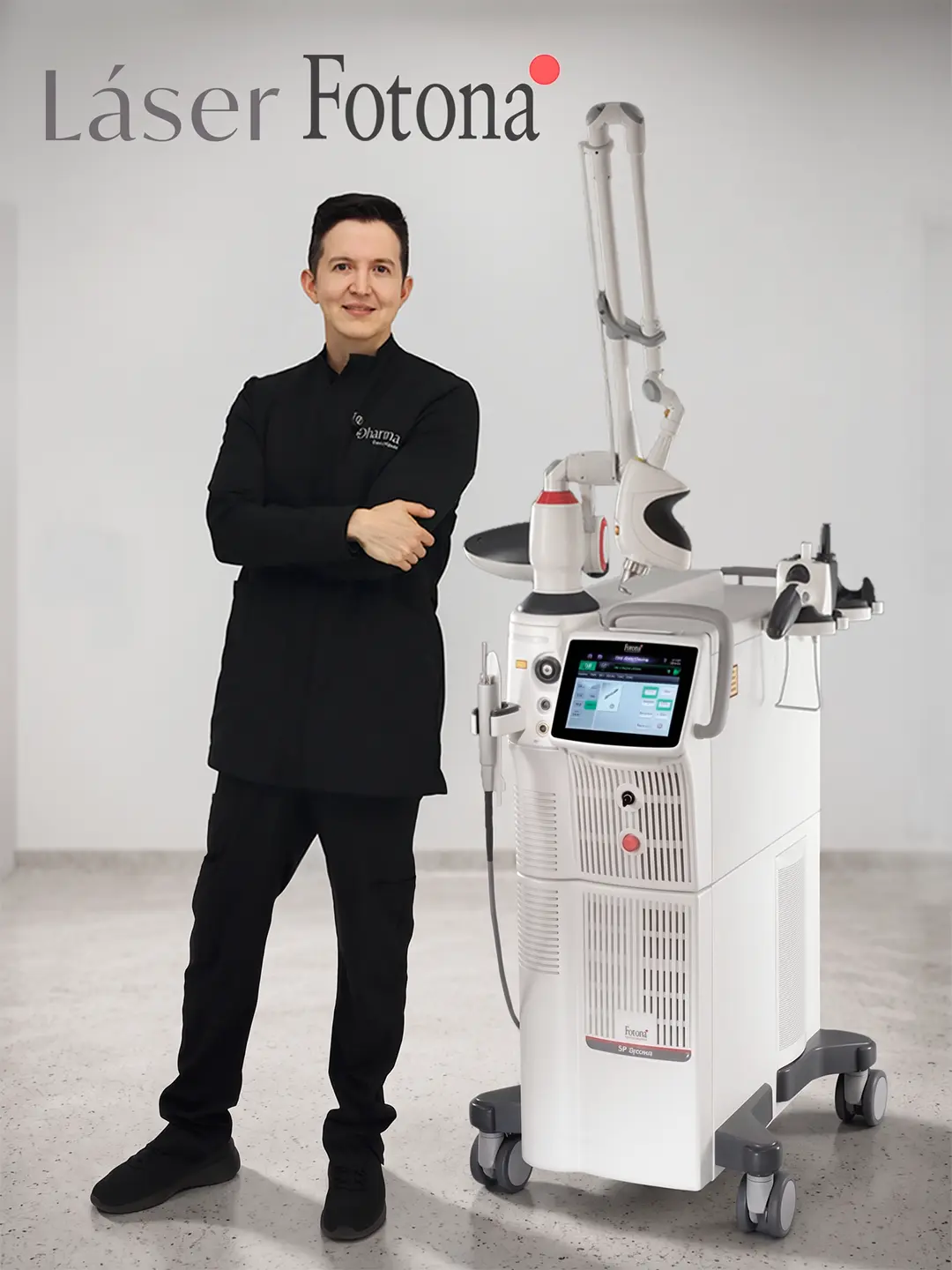
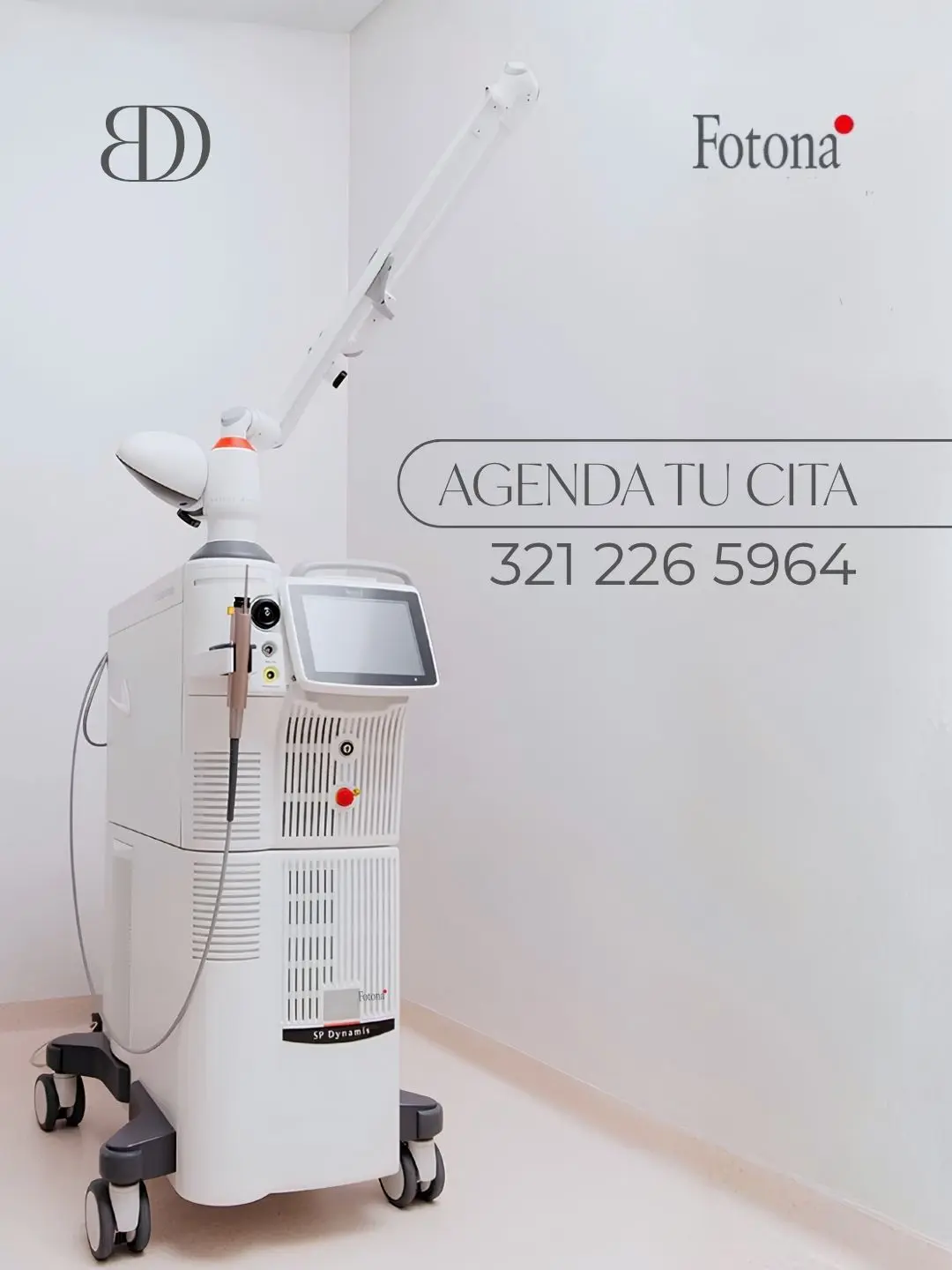
Fotona Laser in Medellín
One platform that covers skin quality, the eye area, stretch marks, the scalp, nail fungus and even snoring sounds like marketing — but Fotona genuinely has separate protocols for each, because it works by changing the wavelength and the delivery rather than by doing one thing to everything.
At Be Dharma in Medellín we use Fotona inside protocols decided after a medical assessment: which mode, at what depth and how many sessions depends entirely on what is being treated.
Fotona: Aesthetic and Medical Uses in One Platform
Skin that looks firmer, brighter and renewed
Fotona can support facial rejuvenation because it delivers controlled laser energy to the skin and stimulates the processes tied to collagen production. That gradually improves firmness, texture and the overall appearance of the face.
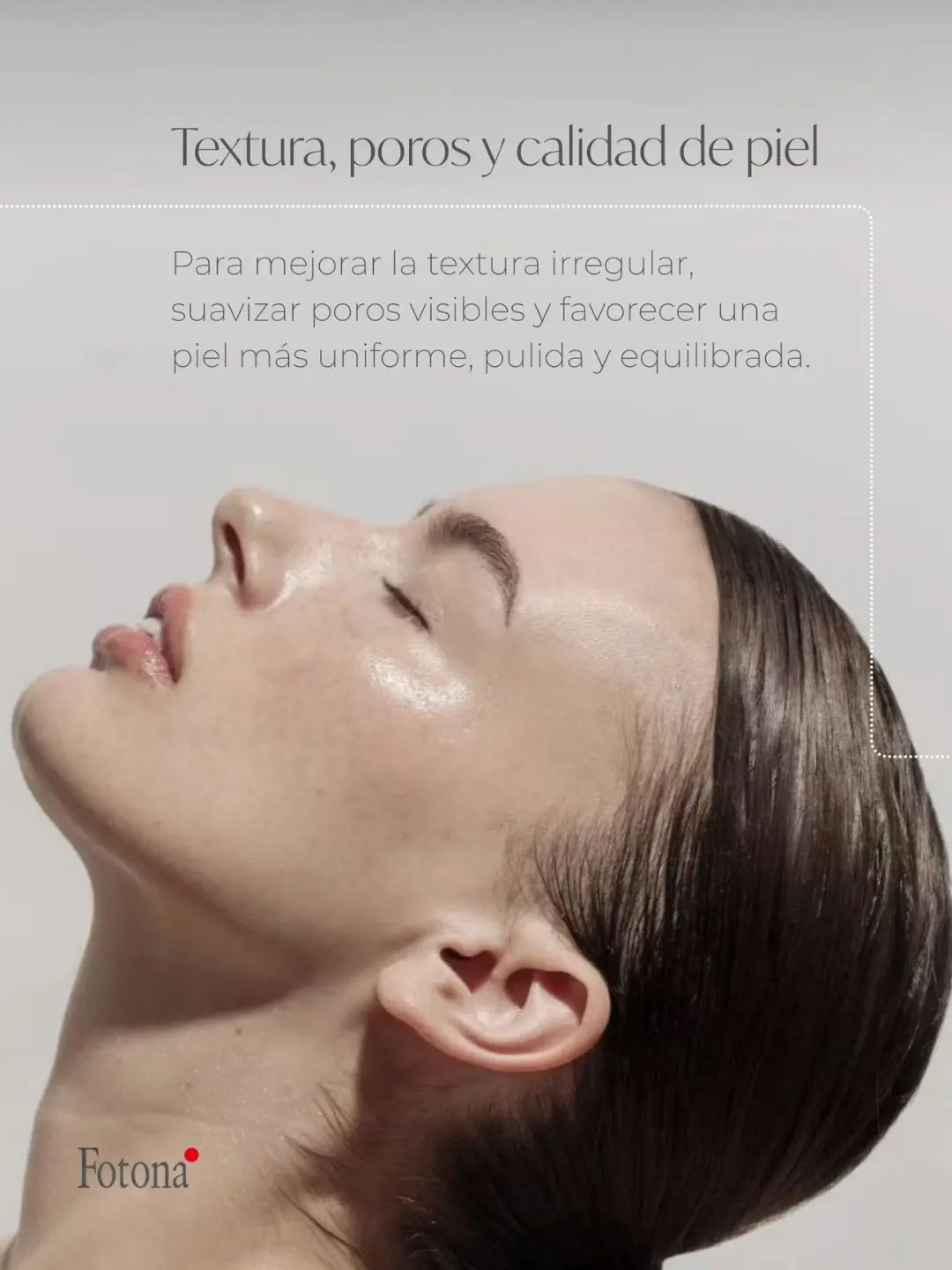
More even texture and less visible pores
When skin looks uneven, dull or has marked pores, Fotona can work the superficial layers to encourage renewal. The effect is skin that looks more polished, balanced and uniform.
A more rested look
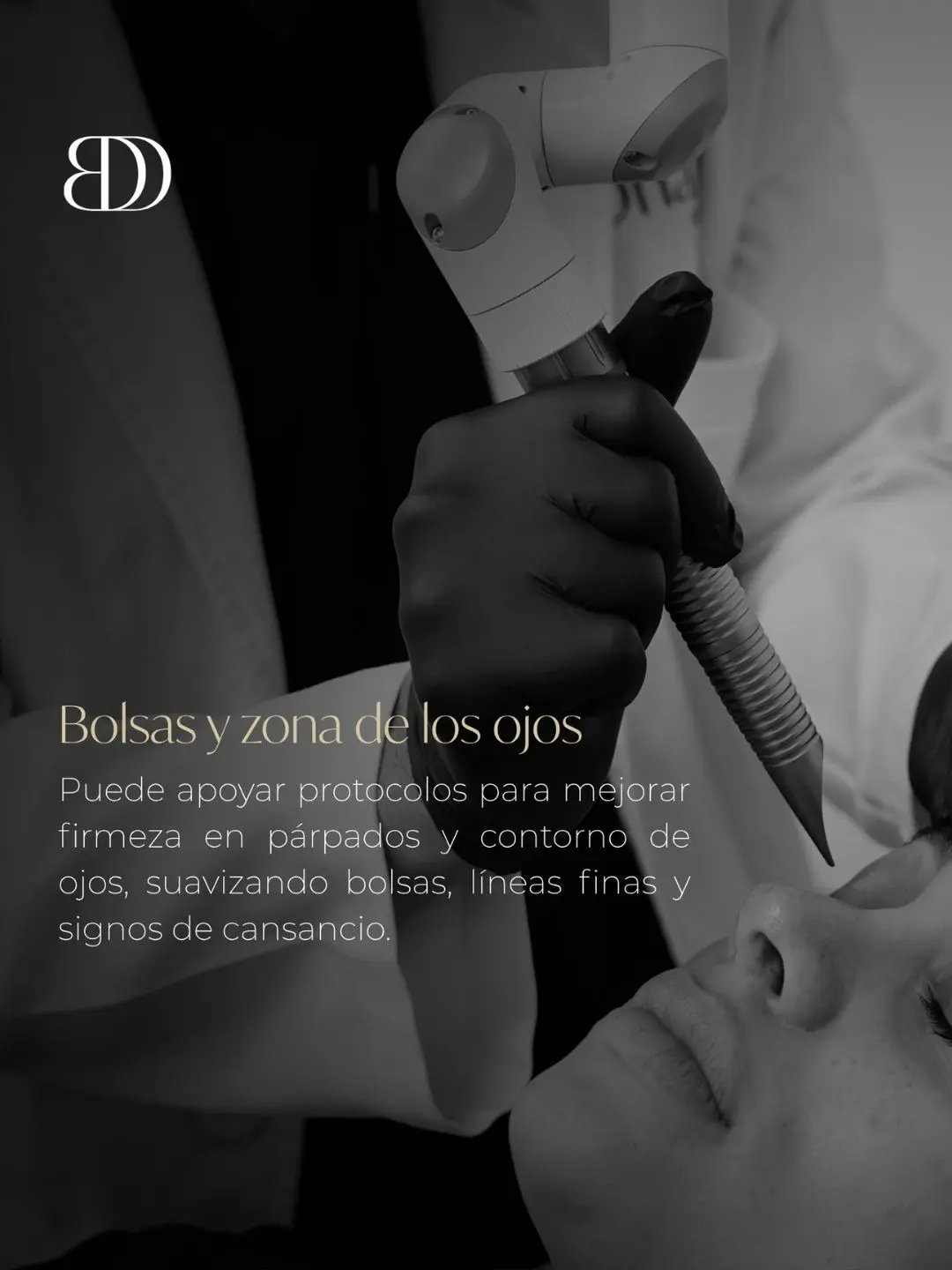
Fotona has protocols for the area around the eyes, including the eyelids. By improving the quality and firmness of the skin in that delicate area, it can soften the appearance of bags, fine lines and signs of tiredness.
A fresher expression and subtly lifted brows
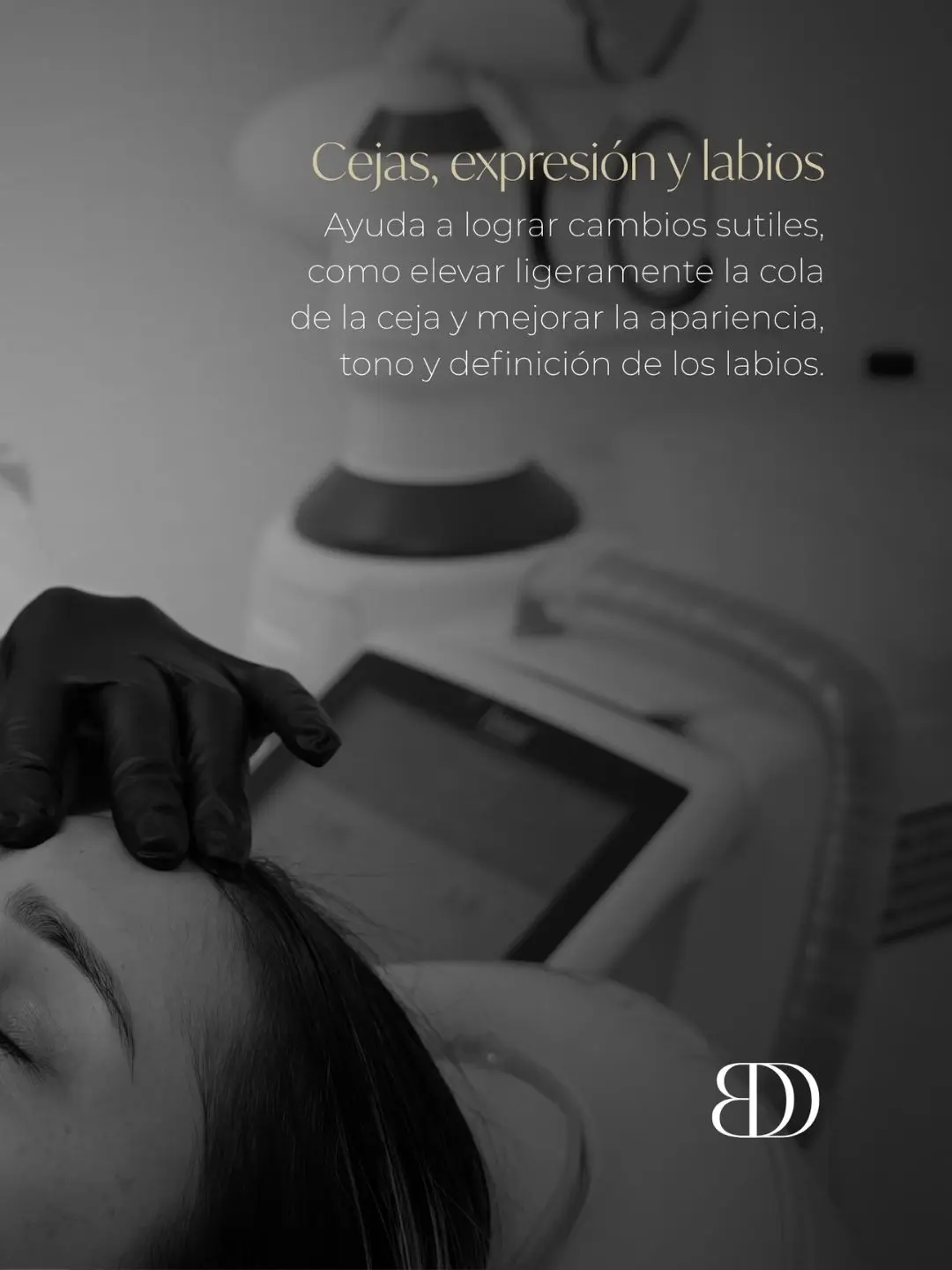
In some patients Fotona produces a gentle tightening effect in strategic areas of the face. That can support a delicate lift of the brow tail and a more open, rested expression.
Lips that look more hydrated and defined
Fotona can be used in protocols aimed at improving how the lips look without adding volume. It supports a more hydrated appearance, a healthier tone and fresher definition — which is a different goal from filler.
Stretch marks that look smoother and more even
Fotona can be built into protocols for the appearance of stretch marks, because it stimulates skin renewal and supports gradual repair. That can soften the texture of the area and make the skin look more homogeneous.
Less visible redness
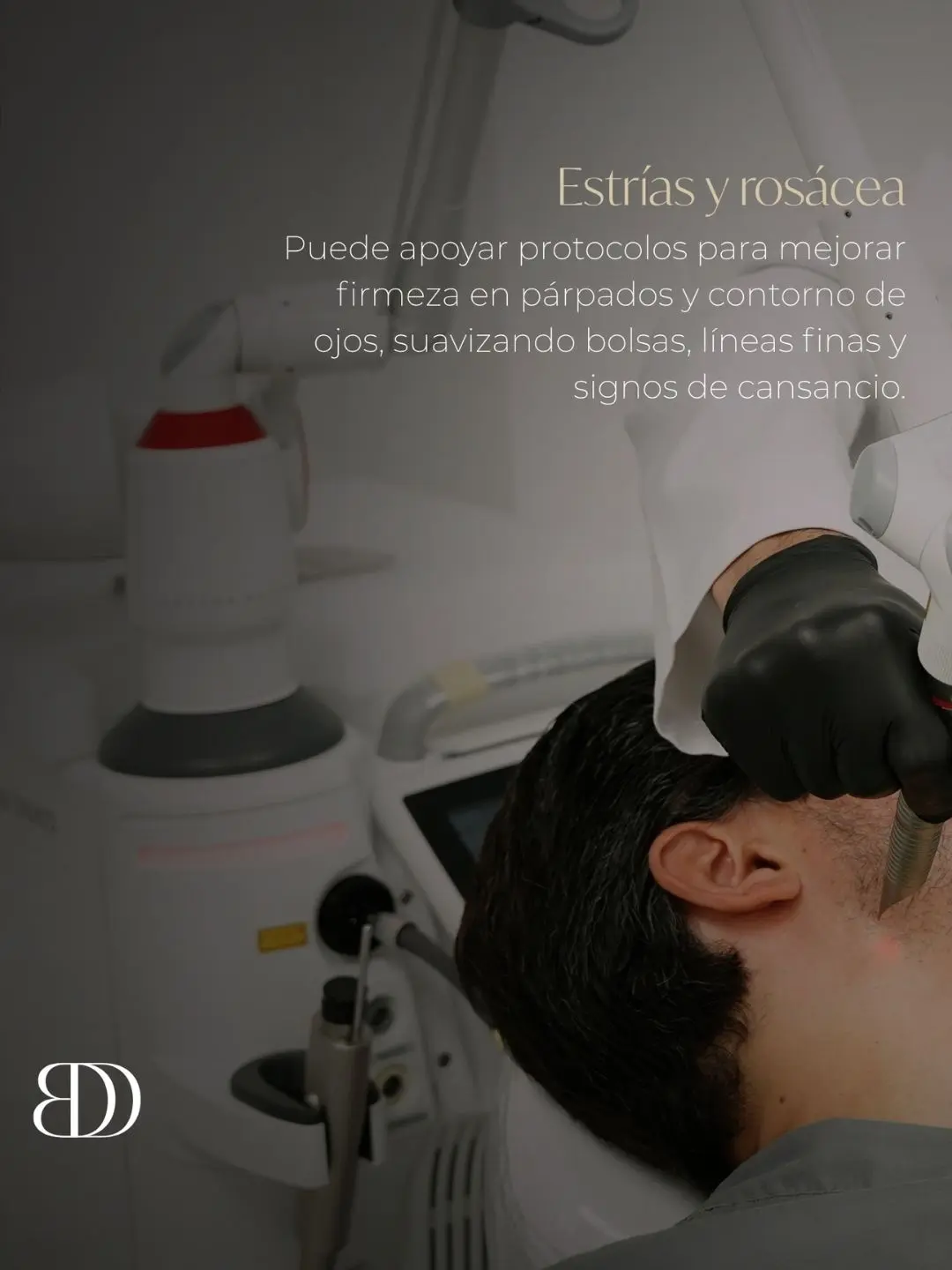
In selected cases, Fotona can support protocols for visible vascular changes, such as persistent redness or small lesions associated with rosacea. Its laser energy can target specific structures in the skin — always according to the medical assessment and how reactive your skin is.
Support for scalp health
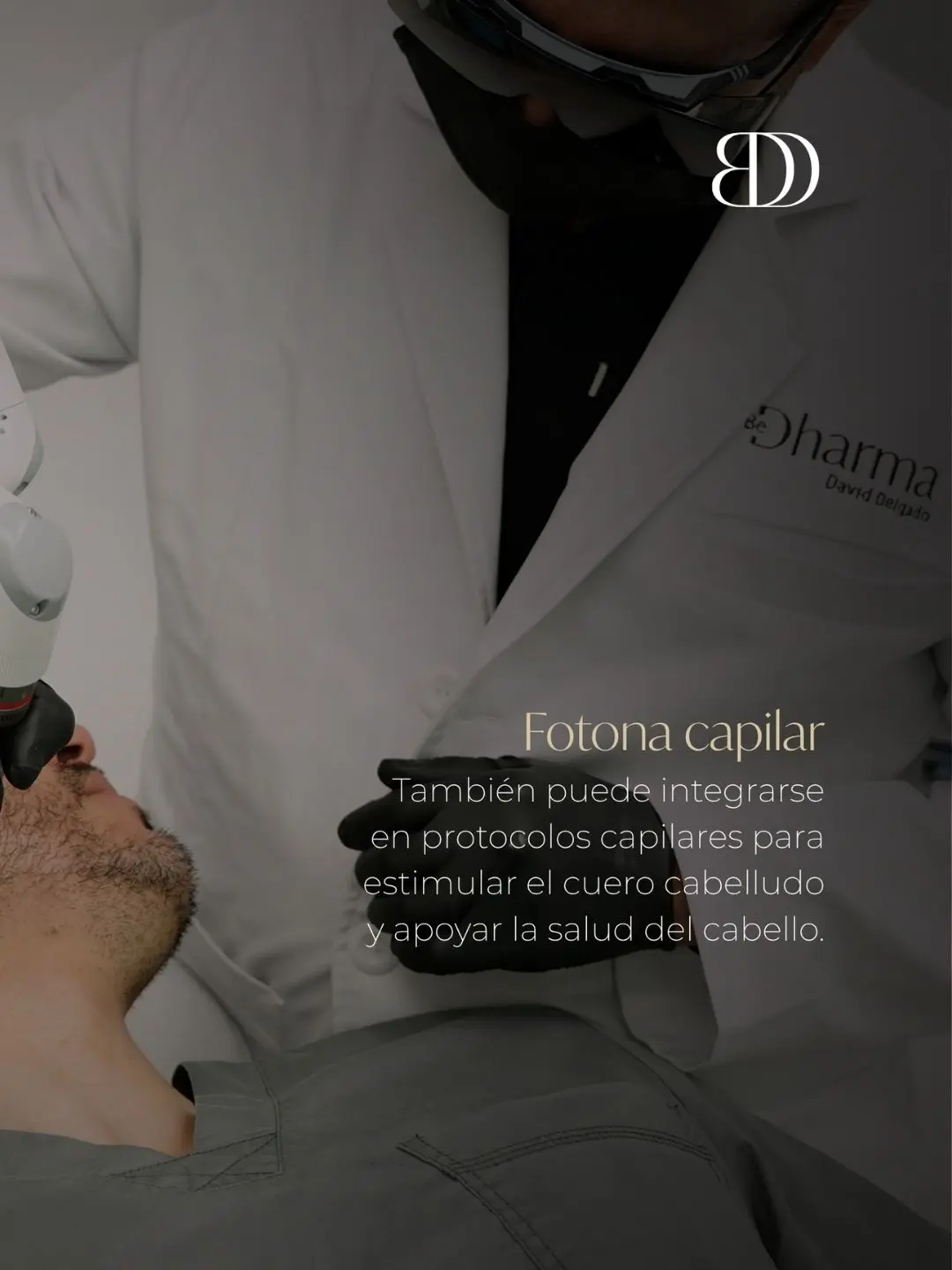
Fotona can also be built into personalized hair protocols, because it stimulates the scalp with controlled energy. That stimulus can accompany treatments focused on improving the condition of the scalp as part of a wider hair plan.
Support in managing nail fungus
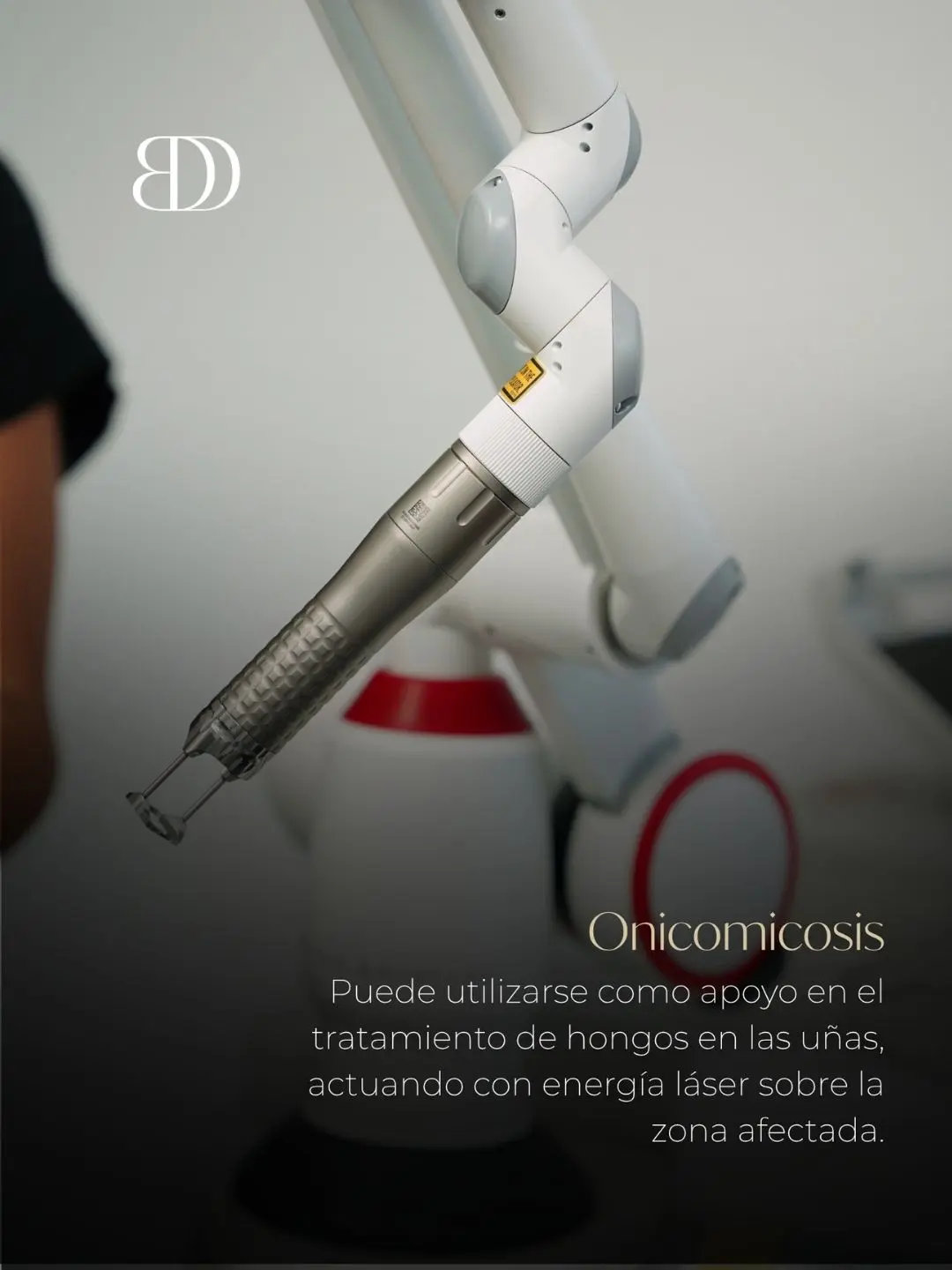
In cases of onychomycosis, Fotona can be used as therapeutic support by directing laser energy at the affected nail. The aim is to weaken the microorganisms involved and complement the treatment indicated by the physician.
Less intense snoring in selected patients
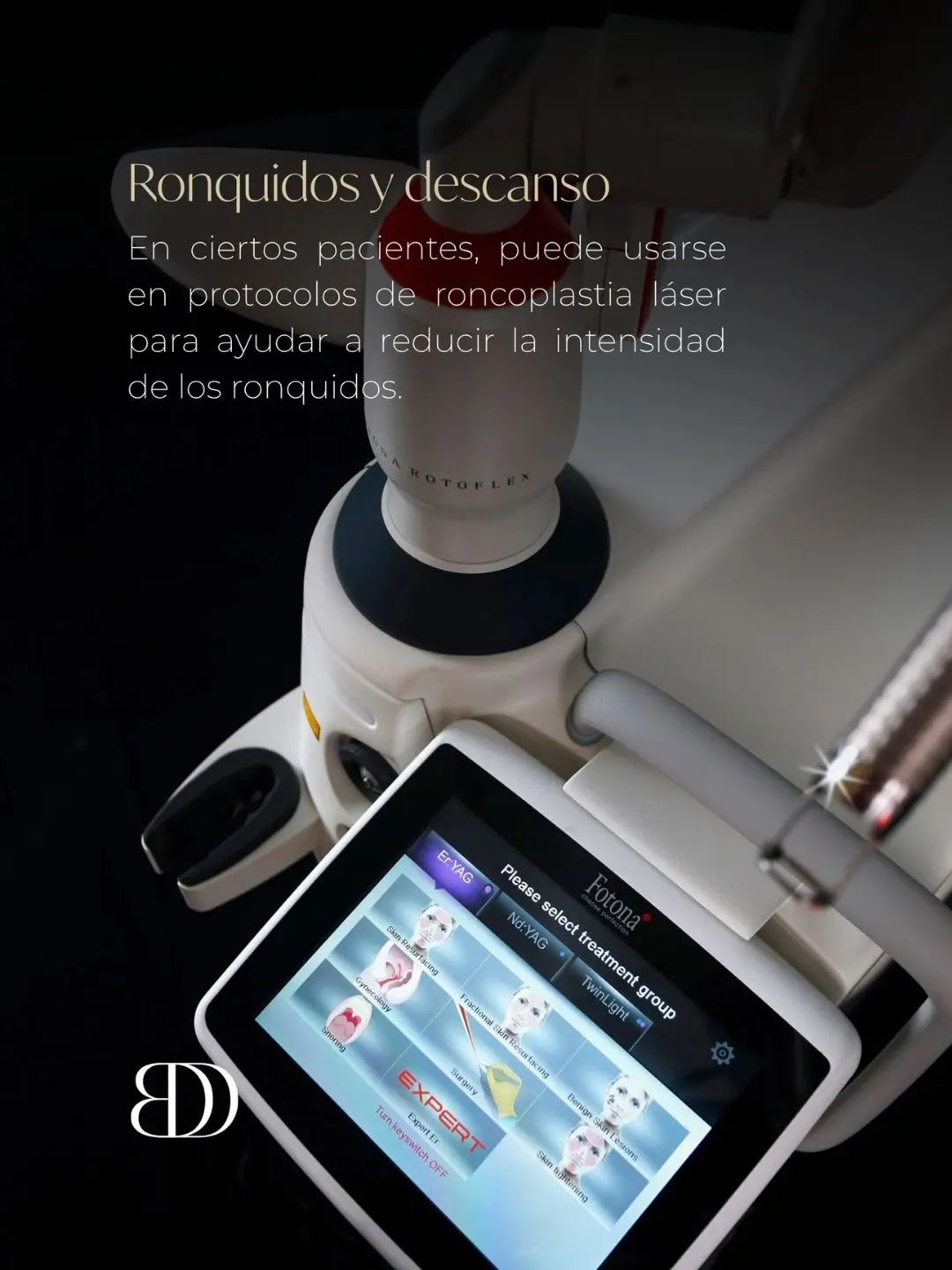
Fotona can be used in laser snoreplasty protocols when snoring is associated with the vibration of tissue at the back of the throat. The aim is a controlled effect on that tissue to help reduce the intensity of the snoring — in selected cases, and after assessment.
When Is Fotona Laser Recommended?
The Fotona laser can be an option when you want to improve a specific aesthetic or medical condition with a versatile, non-surgical technology adapted to your case. These are the situations where it comes up most often:
- Facial laxity, loss of firmness and fine lines.
- Uneven texture, visible pores and dull skin.
- Under-eye bags, loss of firmness in the eyelids and a tired look.
- Brows that look heavy, or an expression that reads as tired.
- Lips that look dehydrated, poorly defined or lacking vitality.
- Stretch marks, visible redness and rosacea in selected patients.
- A weakened scalp, or the need for support in a hair plan.
- Nail fungus (onychomycosis).
- Snoring associated with tissue vibration in the throat.
Fotona Laser at Be Dharma, in Torre Médica Oviedo
At Clínica Be Dharma we see patients at Torre Médica Oviedo, one of the best-established medical addresses in Medellín. We are on the seventh floor, in suites 776–780, at Calle 6 Sur #43A-227, El Poblado — with parking and easy access from the rest of the city.
Questions?
Frequently Asked Questions About Fotona Laser in Colombia
What is the Fotona laser and what is it for?
The Fotona laser is a medical technology that uses controlled laser energy to work on different layers of the skin and on specific tissue. At Be Dharma it is used in protocols for facial rejuvenation, firmness, texture, visible pores, the eye area, lips, stretch marks, redness, the scalp, nail fungus and snoring — each with its own settings.
How does your face look after Fotona laser?
After a session the skin can look brighter, fresher and gradually firmer, depending on the protocol performed. In some cases there is mild redness, tenderness or temporary local warmth, so what you see on the day is not the final result.
How much does Fotona 4D cost?
It depends on the medical assessment, the condition of your skin, your goal, the area treated and the number of sessions recommended. At Be Dharma the price is established after evaluating your case, so the protocol and the figure actually match.
How long does the effect of Fotona laser last?
It varies with your age, skin quality, habits, sun exposure, home care and the protocol performed. In rejuvenation treatments the results are gradual, because they depend on how your skin responds rather than on the session alone.
How many Fotona sessions are needed?
It depends entirely on what is being treated. A protocol for texture and brightness is not the same as one for rejuvenation, stretch marks, rosacea, scalp health, nail fungus or snoring. The number is defined after an assessment.
What are the side effects of Fotona laser?
They can include temporary redness, a feeling of warmth, tenderness, mild swelling, dryness or flaking, depending on the protocol applied. On sensitive skin or with more intensive treatments, the medical team should explain what to expect before you start.
Which is better, Morpheus or Fotona?
They are not the same thing, so the question is not which is better but which fits your case. Morpheus works with fractional radiofrequency and microneedles; Fotona uses laser energy with different modes of action. The choice comes out of the diagnosis, not a preference.
What can go wrong with laser on the face?
Applied without a proper assessment or with the wrong parameters, laser can cause irritation, pigmentation, burns, prolonged sensitivity or results you did not want. That is the real reason this kind of technology belongs in a specialized medical setting rather than wherever it is cheapest.
How painful is Fotona 4D?
Fotona 4D is tolerable for most patients, though the sensation varies with the area treated, individual sensitivity and the protocol used. Some people feel warmth, small stimuli or mild discomfort during the application.