
Implant crown
Replaces one tooth
- Support
- An implant in the bone
- Reduces healthy teeth?
- No
- Fixed or removable
- Fixed
- Preserves bone
- Yes, it stimulates it
A tooth that feels like your own again. We replace one or several missing teeth with an implant planned for your case, within a restorative plan that looks after your bite, your function and a natural result.
We start from your CBCT scan and your panoramic X-ray, not from a generic quote.
The implant surgery and the crown, bridge or denture that goes on it are coordinated by the same clinicians.
If you are coming from another city or country, we assess your case in a virtual pre-consultation before you fly to Medellín.
We work inside a medical building with imaging equipment and sterilization on site.
A dental implant is a titanium post that integrates with the upper or lower jawbone and replaces the root of a missing tooth. A crown, a bridge or a denture is then placed on it, so the new tooth stays fixed and works for chewing and speaking like a natural one.
The titanium post replaces the root of the missing tooth, but the part you see and bite with sits on top. Depending on how many teeth are missing and where, that part changes: it can be a crown, a bridge or a denture, and almost always a temporary while the bone heals.
At Clínica Be Dharma we define the surgery and the tooth that covers it in a single plan, so the result feels solid, comfortable and your own.
The implant gives the crown a fixed base, which helps restore bite strength and widen the range of food you can eat comfortably.
When a tooth is lost, the bone that held it tends to resorb. The implant stimulates that bone in a way similar to the natural root and helps preserve it.
Unlike a bridge, an implant does not require reducing the teeth beside it. It also fills the empty space and stops the adjacent teeth from tipping or wearing.
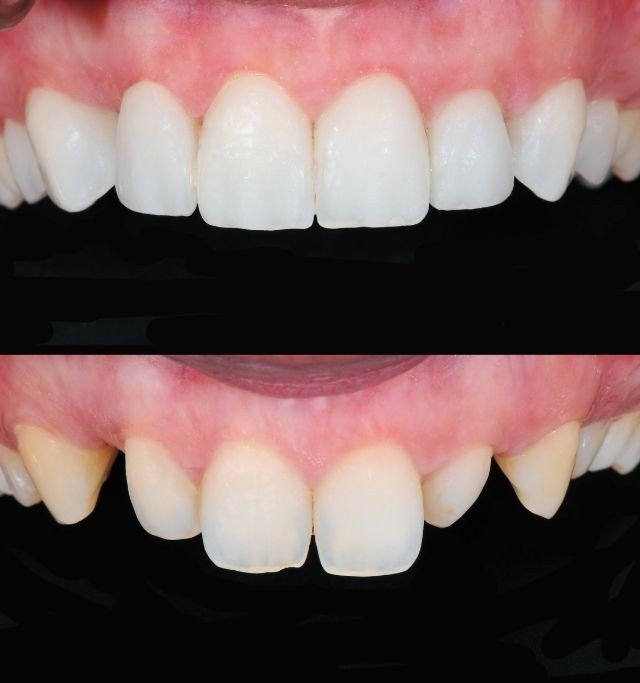
The crown or denture that sits on the implant is designed around the color and shape of your own teeth, so the new piece blends with the rest of your smile.
Anchored in the bone, an implant offers a stability a removable denture cannot, and lets you speak, smile and eat without worrying that the piece will shift.
With good planning, daily hygiene and regular check-ups, implants can stay with you for many years.
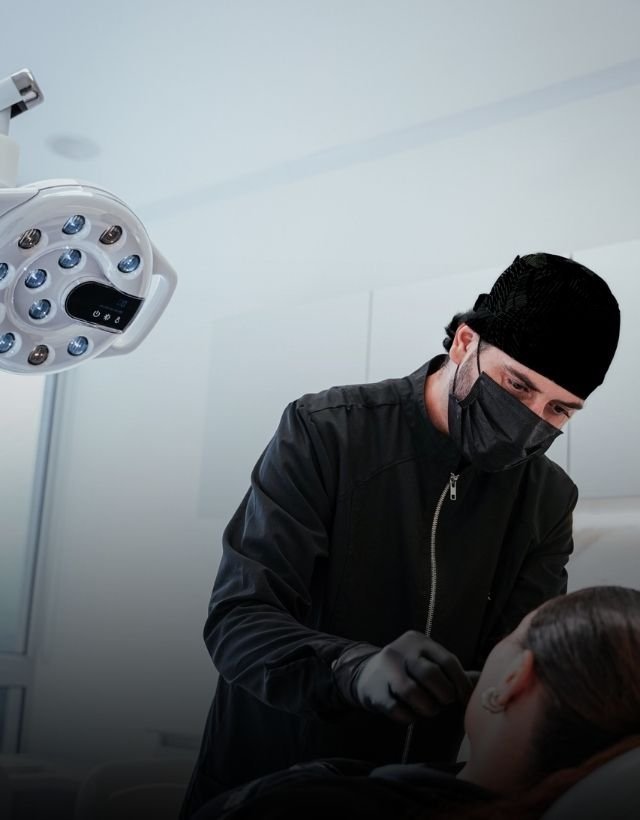
A dental implant is indicated when one or several teeth are missing, when a tooth is fractured or damaged beyond saving, or when a removable denture has stopped giving function and comfort. Also when you want a fixed solution without reducing the neighboring teeth. The final indication always depends on the consultation with imaging. It is usually considered in cases like these:
Choosing between an implant and the alternatives is not the same for everyone: it depends on the condition of the neighboring teeth, the amount of bone and your goals.
Replaces one tooth
2 to 4 consecutive teeth
Several teeth or a full arch
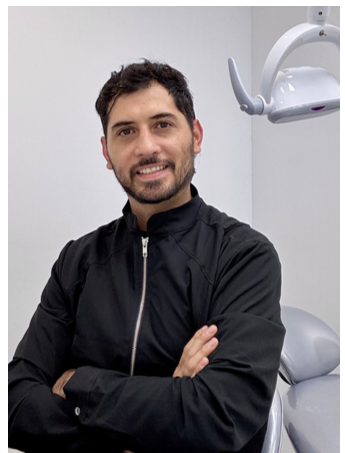
General dentist · Lic. 5-4513-08
View profile
Periodontist
View profile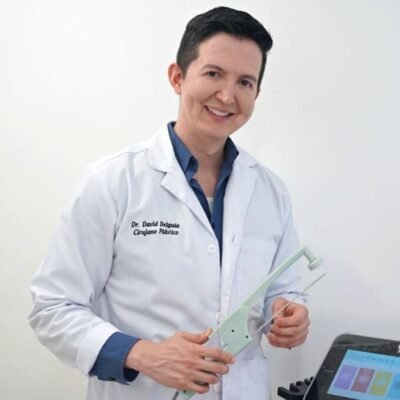
Medical director
View profile
We are at Torre Médica Oviedo, in El Poblado, Medellín: Calle 6 Sur #43A-227, floor 7, suite 776. That is where we carry out the consultation, review or take the diagnostic imaging and plan the implant, all inside one medical building with imaging and sterilization on site.
You can see before and after cases or write to us from contact. Hours: Monday to Friday 8:00–17:00 and Saturday 8:00–12:00.
In 2026 the reference figure starts at approximately COP $4,000,000 for an implant without the restoration, and is around COP $7,000,000 when it includes the crown or denture that goes on top. This is an orientation range: the final price is only confirmed after the in-person consultation with a CBCT scan and a panoramic X-ray.
| Scope | Reference figure (COP) | What it includes |
|---|---|---|
| Implant (without restoration) | from ~$4,000,000 | Titanium post integrated with the bone |
| Implant + restoration | ~$7,000,000 | The implant plus the crown or denture on top |
Conditions: orientation figures for 2026, per unit, subject to clinical assessment. They do not include additional procedures such as a bone graft or extractions.
Traveling from another city or country? We start with a virtual pre-consultation to assess your case before you travel. We review your photos and any imaging you have, and explain which options could apply.
From there we give you an approximate investment range and set the dates, so the time you spend in Medellín goes into treatment and not into logistics.
Be Dharma at Torre Médica Oviedo We are in El Poblado, a central area of Medellín that is easy to reach for visitors.
Four steps to understand your case and plan the trip with clear dates.
You fill in the form with your city or country, which teeth you want replaced and the dates you could travel.
We talk through your expectations and medical history and review the photos, CBCT scan and panoramic X-ray you have at hand.
We outline a preliminary option, the phases of treatment and an initial investment range so you can arrange flights and accommodation.
At the clinic we carry out the clinical examination, confirm the plan and set the final price in writing.
The figure given at the pre-consultation is preliminary and is not a firm quote. It can change after the in-person consultation, depending on the condition of your bone, how many teeth need treatment, the material chosen and any additional procedures required, such as a bone graft.
Compare fares by departure city, dates and season.
We advise on places to stay near El Poblado and how many nights to plan for.
We coordinate check-ups and aftercare once you are back home.
An implant usually suits better when the neighboring teeth are healthy, because they do not have to be reduced and it also preserves the bone where the tooth was. A bridge can be an option when those adjacent teeth already need crowns. The decision depends on the condition of the neighboring teeth and on your bone, and is made at the consultation.
For the first days a soft diet, cold compresses, no smoking and the prescribed medication. Long term, the implant is cared for like a natural tooth: brushing, cleaning between the teeth and regular check-ups. Good hygiene is what most influences how long an implant lasts.
In some cases yes — what is called an immediate implant — when there is enough bone and no active infection in the area. In others it is better to let the site heal before placing it. Only the consultation with imaging determines whether your case allows it.
Smoking does not rule out an implant outright, but it raises the risk that the bone will not integrate well and of gum complications, which lowers the success rate. We recommend cutting down or stopping before and after surgery; we assess it case by case.
An implant usually takes several months, because the main wait is osseointegration: the bone needs to bond with the implant before the definitive crown goes on. The usual wait is three to six months from surgery to the final restoration, with a temporary in place meanwhile.
With good hygiene and check-ups, implants can stay with you for many years; survival studies show that between 90% and 95% are still functional at ten years. The crown or denture on top may need replacing over time. It would not be correct to promise they last a lifetime.
Not always. A graft is only indicated when there is not enough bone to hold the implant. When it is needed, it requires a healing time of about three to six months before continuing with the implant. If there is already enough bone, the implant is placed without one.
If you already have a panoramic X-ray or a CBCT scan, bring it; if not, we will tell you where to get one in Medellín.
Aesthetic Clinic I Website and strategy by: amedik.co
All rights reserved I 2022
WhatsApp us